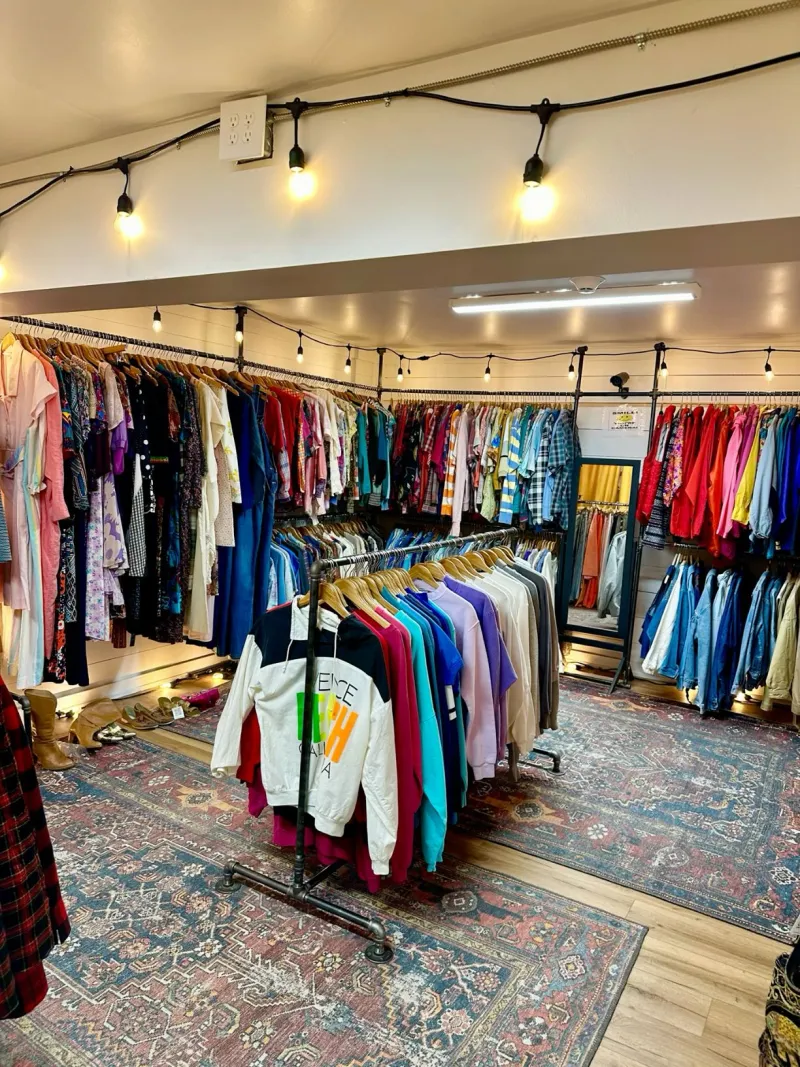
Grandma's Linen Was Right All Along: Why Vintage Stem-Fiber Finds Are the Hottest Pull in Thrifting

Photo: Steve Shook from Moscow, Idaho, USA, CC BY 2.0, via Wikimedia Commons
There's a particular kind of thrill that comes from flipping through a rack at a small-town thrift shop and pulling out a garment that feels different. Heavier. Cooler to the touch. A little stiff, but in a way that promises it will soften, not fall apart. If you've had that moment, chances are you were holding a stem-fiber piece — hemp, linen, or ramie — and you were holding a garment that had already outlived every polyester trend of the last forty years.
Across the country, from Portland flea markets to estate sales in the Carolinas, young resellers are hunting vintage stem-fiber clothing the way previous generations hunted Levi's 501s. And honestly? They're onto something.
The Most Sustainable Shirt Is the One Already Made
We say it a lot around here, but it bears repeating: the greenest wardrobe isn't built from new purchases, no matter how eco-friendly the label. Every garment that already exists represents water, land, labor, and energy already spent. Buying it secondhand means that footprint doesn't grow — and every year you keep it in rotation is a year nobody had to manufacture its replacement.
What makes vintage stem-fiber finds special is that they weren't built to be disposable. Mid-century American closets were full of hemp workwear, linen dresses, and ramie blouses because these fibers were what people had — long before anyone put the word "sustainable" on a hangtag. They were made for decades of washing lines and worn knees.
A Quick History Lesson Hiding in a Thrift Rack
Hemp and flax were grown on American soil long before the twentieth century. Colonial farmers were legally required to raise hemp in some colonies; linen was the fabric of everyday shirts and aprons. Even after cotton mechanization took over, stem fibers hung on in workwear, summer clothing, and household textiles through the 1950s and beyond.
The decades that followed weren't kind to them. Hemp got tangled in federal prohibition, and synthetics swept in with cheaper price tags and louder marketing. But here's the thing about a well-made linen shirt from 1968: it didn't care about marketing cycles. It just kept existing — in attics, in estate boxes, and eventually on thrift store racks in towns like Asheville, Marfa, and Brattleboro, waiting for someone who recognized it.
How to Spot a Stem-Fiber Find
You don't need a fabric lab to identify these pieces. You need your hands and about thirty seconds.
The burn test is overkill. The touch test is everything. Stem fibers feel cool and dry, never slick or clingy. Linen has a slightly crisp, almost papery handfeel; hemp is weightier and more textured, like the fabric equivalent of a handshake.
Read the labels when there are any. Words like "flax," "ramie," "hemp," or a linen-cotton blend are your green lights. Vintage union labels and care tags can also help date a piece.
Check the seams and hems first. Stem-fiber garments that survived this long usually have reinforced stitching and generous seam allowances — signs they were built for alteration and repair, not the landfill.
Hold it up to the light. Linen and hemp often show a subtle slubby texture in the weave, tiny irregularities that synthetics can't fake convincingly.
The Reseller Economy Meets the Estate Sale
Scroll through Depop or Grailed and you'll find vintage hemp tees and linen chore coats listed at prices that would've made their original owners laugh. There's a real market dynamic here: supply is finite. Nobody is weaving 1970s ramie anymore, so every thrifted find is genuinely one of a kind.
That scarcity has turned thrift hunting into a skill, and the resellers who've developed an eye for fiber content are doing something quietly radical — they're creating demand for durability. When a fifty-year-old linen shirt sells for more than a brand-new fast fashion one, the market is sending a message.
Caring for Your Find So It Outlives You
Bringing home a vintage stem-fiber piece is a small act of stewardship. A few habits go a long way:
- Wash cold and gentle, and skip the dryer. Heat is the enemy of flax and hemp fibers. Air drying also gives linen that beautifully rumpled look for free.
- Embrace the wrinkles. Stem fibers crease — that's part of their charm, not a flaw to fight with an iron every time.
- Repair early. A small tear in linen is a ten-minute fix with a needle. Left alone, it becomes a hole.
- Store loosely. Natural fibers need to breathe. Plastic bins and vacuum bags are their nemesis.
The Full Circle Moment
There's something poetic about a hemp work shirt grown in American soil, worn for decades, forgotten for two more, and now hunted by a generation that wasn't born when it was made. It's proof that fashion's best ideas don't always come from a design studio. Sometimes they come from a $6 thrift rack in Ohio.
So the next time you're browsing a secondhand shop, slow down. Run your hands along the racks. The cool, textured, unreasonably durable garment you find might be a piece of agricultural history — and it's ready for its second act in your closet.
Wear the change. Or better yet, wear the one that already changed everything once.