Small Towns, Big Racks: A Secondhand Road Trip Through America's Underrated Thrift Country
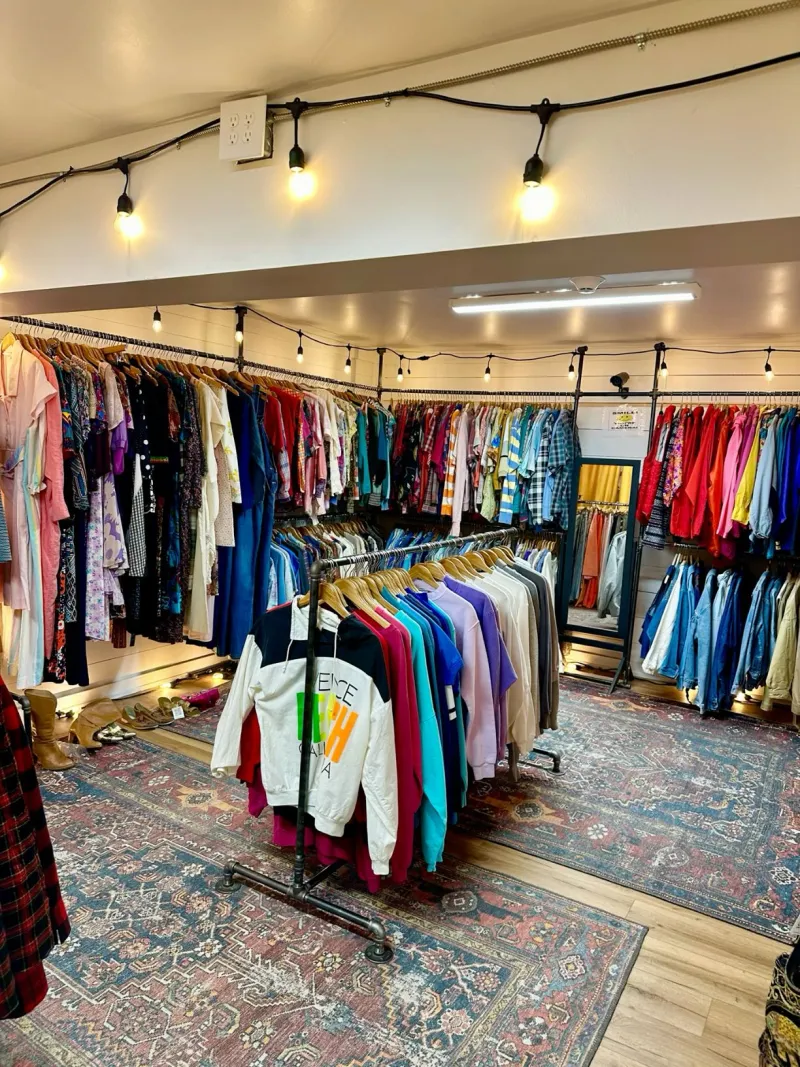
Photo: vintage clothing racks inside small town thrift store, via i.pinimg.com
Skip the City, Find the Gold
Everyone knows the big-city vintage scene: curated racks, boutique lighting, price tags that make you do a double take. But the real treasure in American secondhand? It's hiding in plain sight, in towns where the thrift store still runs on volunteers and a wool blazer costs less than lunch.
There's a simple math to it. Small-town donation centers receive fewer resellers, less trend-chasing, and a whole lot of clothing that people simply wore out slowly, decades ago — often in natural fibers that were the only option at the time. That's the sweet spot for a conscious closet: garments that already exist, made from materials that can live again.
The Routes Worth Driving
The Midwest Rummage Circuit. Church rummage sales in towns like Holland, Michigan, or Decorah, Iowa, operate on a different economy. Prices are set to move inventory, not maximize margin, and estate donations mean an unusually high density of cotton, linen, and wool. Timing is everything: many of these sales happen once or twice a year, so a little calendar research pays off big.
The Desert Vintage Belt. Head south and the storage equation flips. Dry climates from Bisbee, Arizona, to Marfa, Texas, have preserved vintage pieces that would have mildewed elsewhere — think 1970s cotton workwear, sun-faded chambray, and leather that's decades into its break-in. Warehouse-style shops out here often hold thousands of pieces unsorted, which is exactly where patient hunters thrive.
The New England Estate Trail. Towns across Vermont and upstate New York feed their thrift stores with generations of well-kept clothing. This is linen country, wool country, and country where a hand-knit sweater might run you four dollars.
Hunting for Fiber, Not Just Vibes
A road trip haul should outlast the trip. Our rule of thumb: check the tag before you check the mirror.
- Read the composition label first. Seek out 100% cotton, wool, linen, or hemp. These fibers age gracefully, mend easily, and — when their second life ends — can actually biodegrade instead of shedding microplastics for centuries.
- Squeeze test. Natural fibers have a hand-feel synthetics can't fake. Crisp linen, dense wool, soft-worn cotton — your fingers will learn the difference faster than your eyes.
- Inspect the stress points. Elbows, cuffs, seams, and buttonholes tell you whether a piece has decades left or one season. Small seam issues are fixable; fabric worn thin at the fold line usually isn't.
- Smell check, honestly. A day in the sun fixes most vintage odors. Mildew doesn't come out.
Pack Light, Leave Heavier
The beauty of a thrift road trip is the built-in sustainability loop. You're not buying new — you're redistributing what exists, keeping textiles out of landfills, and putting your dollars into church kitchens, animal shelters, and community centers instead of fast fashion's supply chain.
Pro logistics: bring a duffel, pack a stain pen and a travel steamer, and leave room. Many small-town shops are cash-only, so hit an ATM before the highway. And when a local volunteer tells you about the store two towns over? Always go. The best inventory in America has never been photographed.
The Point of the Detour
The most sustainable garment is the one already hanging on a rack somewhere between here and there. A road trip built around that idea turns shopping into travel and travel into a smaller footprint — with a suitcase full of stories when you get home.