Mended and Proud: How Fixing Our Clothes Became America's Coolest Flex
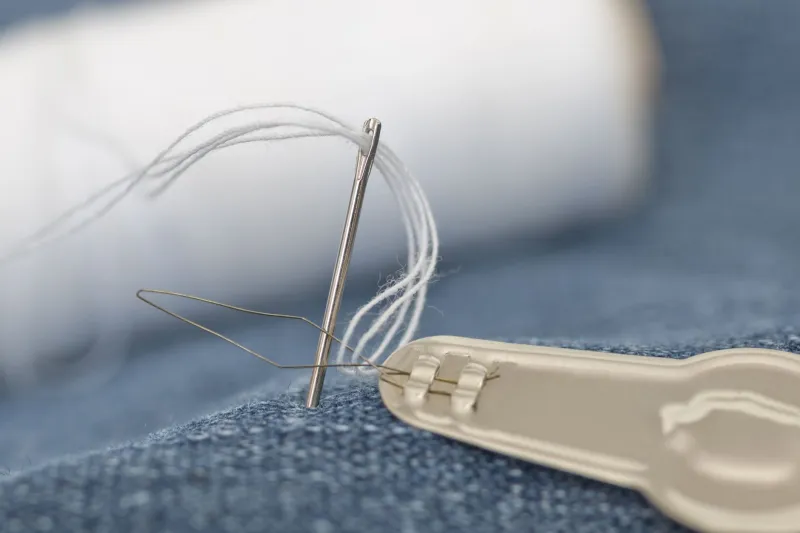
Walk through any thrift district from Portland to Philadelphia and you'll spot it: a denim jacket with a sashiko-style patch in contrasting white thread, a sweater elbow rebuilt in bright orange darning, a tote bag whose torn strap is now the best-looking part of the bag. Repair used to be something we hid. Now it's something we photograph.
Somewhere between the resale boom and the exhaustion of haul culture, a quiet shift happened. Mending stopped reading as poverty and started reading as personality.
From Shame Stitch to Statement Stitch
The roots of this revival run deeper than TikTok. Visible mending borrows openly from Japanese boro traditions and the 'make do and mend' ethic of wartime America — practices born of scarcity that treated a repair as a mark of care, not failure. Gen Z and millennial shoppers, raised on the aftermath of ultra-fast fashion, have reclaimed that logic: if a garment is worth fixing, it was worth buying, and if it's worth buying, the brand should stand behind it.
Repair cafés tell the story in attendance numbers. Community-run fix-it events — where volunteers teach you to patch, hem, and rewire your own stuff — have multiplied across the U.S. in the last five years, and many now run waitlists. Libraries host sewing machine lending programs. Community colleges teach denim reconstruction. The skills our grandparents considered basic maintenance became counterculture, and are now becoming basic again.
There's an economic edge, too. A $12 iron-on patch beats a $60 replacement every time, and in a stretch of stubborn inflation, thriftiness has lost its stigma and gained a following.
The Brands That Teach You to Fix Things
Here's where we plant our flag: the conscious-consumer market is about to be won not by whoever has the greenest label, but by whoever designs clothes that can be repaired at all — and then helps you do it.
Some brands already get it. Outdoor companies have run lifetime repair programs for decades. A few denim labels sell jeans with repair kits sewn into the back pocket. A growing handful publishes repair guides alongside their lookbooks and includes spare buttons and thread swatches in every order. This is the sourcing story of the next decade: not just where a fiber came from, but where the garment will go when it tears — and whether the answer is landfill or laundry room.
A brand that designs for repair is quietly telling you something no marketing copy can: they expect their clothes to last long enough to need it.
Five Repair-Friendly Details to Check Before You Buy
Next time you're holding a garment in a fitting room, run this quick inspection:
- Reinforced stress points. Check the crotch of jeans, underarm seams, and pocket corners. Bar tacks or double stitching mean these high-wear zones will survive a second act.
- Real buttons, spares included. A sewn-on spare button is a small honesty pledge. Glued-on buttons are a countdown timer.
- Generous seam allowances. Flip the hem. Extra fabric folded inside means the garment can be let out, taken in, or re-hemmed by a tailor — or by you.
- Natural or repairable fabrics. Stem fibers like hemp and linen take a needle beautifully and fray in ways you can work with. Thin polyester blends often can't be patched without melting.
- Published repair support. Does the brand offer a mending guide, a repair service, or spare parts? If they'll fix it, they built it to be fixed.
Wear the Scars
There's a phrase making the rounds in mending communities: kintsugi for your closet — the idea that a visible repair adds history instead of subtracting value. We'd take it further. Every darned knee and patched elbow is a receipt proving you opted out of the disposable cycle. That's not a flaw in the garment. That's the whole point of owning it.