One Shirt, Zero Secrets: Following a Stem-Fiber Tee From Harvest to Hanger
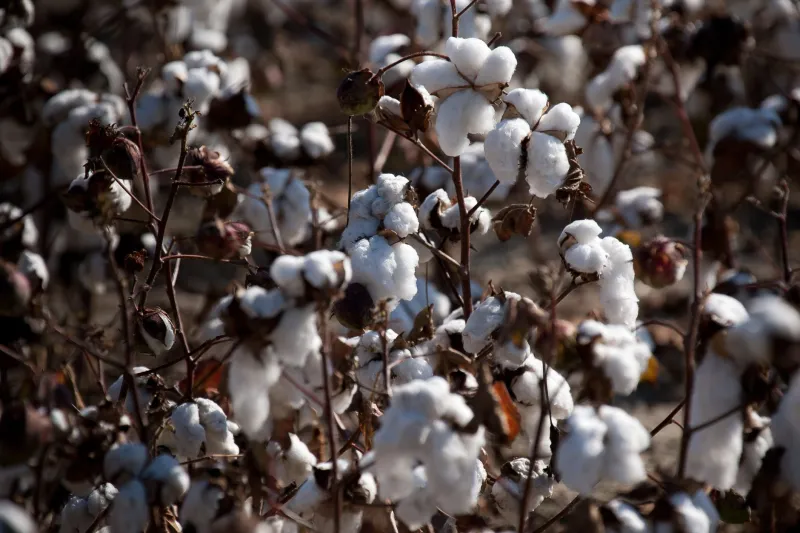
There's a moment on every farm tour that stays with you. For Maya Delgado, our sourcing lead, it happened last October in a field outside Sacramento, watching harvest crews pull fiber stalks as the morning fog burned off.
"She turned to me and said, 'This is the part nobody photographs,'" Delgado recalls. "Everyone wants the finished tee. Nobody wants to see the dirt."
We think that's exactly backwards. So we're pulling back the curtain on a single shirt — our best-selling unisex crew — and tracing every mile, every gallon of water, and every pair of hands it touched before landing in a closet in Chicago.
It Starts With the Plant, Not the Pattern
Unlike conventional cotton, which demands roughly 2,700 liters of water for a single t-shirt's worth of fiber, the plant stems we source are largely rain-fed. Our partner farms in California and the Carolinas use dryland growing techniques that rely on seasonal rainfall rather than irrigation grids.
That's not a marketing stat — it's the difference between a shirt that drained a watershed and one that mostly drank the sky.
The harvest itself is low-impact by design. Because we're working with fast-growing renewable stalks, there's no tilling up annual crops, no replanting cycle, and no synthetic fertilizer schedule. The fields stay rooted year-round, which keeps soil carbon in the ground where it belongs.
Processing Without the Chemical Cocktail
Here's where most textile stories get ugly. Traditional fiber processing often leans on caustic chemical baths to break down plant material. Our supply chain takes a different route: a water-based retting process that uses enzymes and mechanical separation instead of chlorine derivatives or heavy solvents.
The wastewater from this process? It's filtered and returned to irrigation for non-food crops, tested quarterly by an independent lab in Portland.
"We audited three processors before signing with our current partner," says Delgado. "Two of them couldn't produce water test results without a six-week delay. That delay was our answer."
The Makers: Los Angeles, Not Somewhere You Can't Find on a Map
After spinning, the yarn travels to a family-run cut-and-sew facility in downtown LA — one of the last of its kind in a city that once dressed half of America. The shop pays a verified living wage, offers health stipends, and posts its audit results publicly, something we require of every production partner.
Maria, a seamstress with 22 years behind industrial machines, sewed the first sample of this very tee. She told us she can feel the difference in stem fiber within seconds.
"It doesn't fight you under the needle," she said. "Cotton snags, synthetics melt. This one cooperates."
The Numbers We're Proud Of
For the data-minded among us, here's what one shirt saves compared to its conventional cotton twin:
- Water: roughly 90% less across the full lifecycle
- Pesticides: zero, at any stage
- Dye chemistry: closed-loop, low-impact fiber-reactive dyes only
- Transit: ocean-and-rail shipping with carbon offsets covering the gap
Then It Shows Up at Your Door
The final chapter of this shirt's journey happens without us. It's worn to a farmers market in Minneapolis. Washed cold, dried on a line. Softened by a hundred cycles instead of falling apart after twenty.
Because the fiber is biodegradable, its ending is a beginning — back to soil in a matter of years, not centuries in a landfill.
One shirt. One field. One family of makers. No secrets anywhere in between.
That's the whole story. We think you deserve all of it.