From Field to Fiber: The Leftover Crops Quietly Reshaping American Style
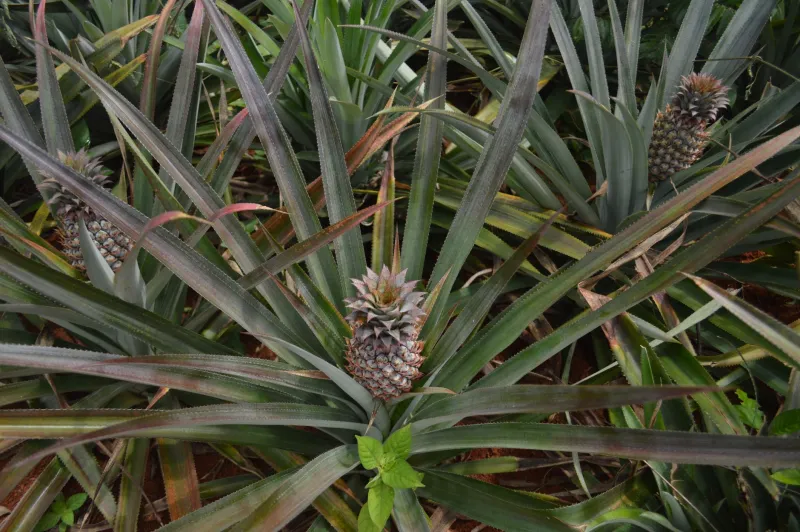
Somewhere in Central Valley, California, tons of citrus peels are headed not to a compost pile but to a spinning facility. In Washington State, apple pomace—the pulpy leftovers of cider and juice production—is being transformed into something soft enough to wear against your skin. And across the pineapple fields of the Pacific, leaves that once rotted in place are now woven into luxurious, leather-like textiles.
Welcome to the second harvest: the quiet revolution where agricultural byproducts become wardrobe staples.
What Exactly Counts as "Farm Waste"?
Here's a stat that surprises most people: for crops like pineapple, the fruit is arguably the minority of the plant. Leaves, stems, stalks, and peels can account for the bulk of the biomass—and for centuries, most of it was burned, tilled under, or left to decompose.
Next-gen textile companies looked at that mountain of leftovers and saw raw material. Pineapple leaf fibers become Piñatex-style alternatives to animal leather. Banana stems, usually discarded after a single fruiting season, yield silky fibers with a hand-feel closer to linen than anything synthetic. Citrus byproducts get processed into a silky yarn often blended with cotton. Even apple pomace, reduced to a fine powder, shows up in bio-based leather alternatives.
None of this requires planting a single new acre. That's the beauty of it—the raw material already exists as a byproduct of food we're growing anyway.
The American Makers to Know
While much of the early innovation happened overseas, the US is catching up fast, and in some cases leading.
West Coast citrus and pomace pioneers. California's agricultural abundance makes it a natural laboratory for fruit-waste textiles. Startups working with orange and lemon processing byproducts are developing yarns that blend fruit-derived cellulose with conventional fibers, creating fabrics with a subtle sheen and a genuinely compelling origin story.
Pacific fiber networks. Hawaiian and Filipino farming cooperatives have long supplied pineapple leaf fiber to global markets. What's changed is the scale and the partnerships: American designers are now contracting directly with grower collectives, ensuring farmers get paid for material they used to pay to dispose of.
Heartland hemp adjacency. The infrastructure built for the hemp renaissance—decortication plants, fiber processing facilities scattered across Colorado, Kentucky, and the Dakotas—is increasingly being adapted to handle other plant stems, including banana and flax. Shared infrastructure means lower costs and faster innovation for everyone.
Why This Matters More Than a Marketing Hook
Skeptics are right to be wary. Fashion has a long history of greenwashing, and "made from plants" can mean anything from genuinely regenerative to industrially processed with a heavy chemical footprint.
But agricultural-waste textiles solve a real problem on both ends of the supply chain. Farmers gain a revenue stream from material that previously cost them money. Shoppers get alternatives to water-hungry conventional cotton and petroleum-based synthetics. And because the feedstock is a byproduct, these fabrics don't compete with food production the way some first-generation bio-materials did.
That's not a gimmick. That's a genuinely circular supply chain.
How to Read a Label Like an Insider
Ready to shop smart? Here's what to look for in 2025:
- **Named materials, not vague claims." Piñatex," "Piñayarn," or specific fruit-fiber trademarks signal traceable sourcing. "Plant-based leather" with no specifics usually signals marketing.
- **Blend percentages. Many fruit-fiber textiles are blended with cotton, PLA, or PU binders. A 30% pineapple content isn't a dealbreaker—but you deserve to know.
- **Certifications that travel. Look for OEKO-TEX, GOTS (for the cotton portions), or third-party lifecycle data. If a brand can't tell you which farm or cooperative supplied the fiber, that's a red flag.
- **End-of-life honesty. The best next-gen brands will tell you how to care for—and eventually retire—the garment.
The Road Ahead
Will agricultural-waste fabrics replace conventional textiles overnight? No. Scaling from pilot mills to industrial volumes takes years, and price parity remains a hurdle. But every conscious purchase sends a signal up the supply chain, and the signal is getting louder.
The next time you slip on a jacket or a pair of sneakers, ask yourself: was this grown twice—once for the table, once for the closet? Increasingly, the answer can be yes. And that's a harvest worth celebrating.
Wear the change.