Say It Without Saying It: The Quiet Power of a Conscious Closet
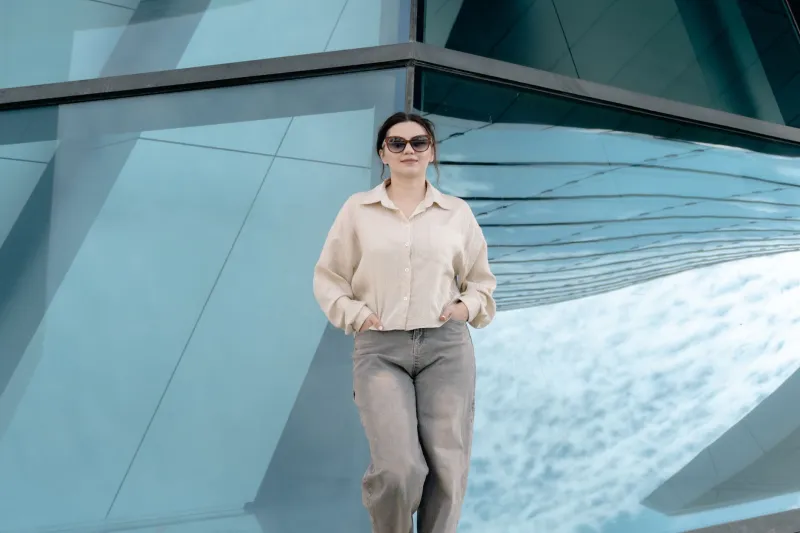
You've got about seven seconds. That's roughly how long it takes for someone to form a first impression of you — before you've told them where you grew up, before you've cracked a joke about the weather, before you've said a single word. In that window, your outfit does all the talking.
And if you're reading this, chances are your outfit has something to say. The question is whether it's saying what you mean.
Your Clothes Are a Resume You Didn't Know You Were Wearing
Think about the last job interview you prepped for. You probably rehearsed answers, researched the company, maybe practiced your handshake in the car. But the person across the desk had already read your outfit — and made a dozen micro-judgments about your attention to detail, your values, and whether you'd fit in.
Here's the thing about conscious clothing: it reads differently. A well-made stem-fiber blazer or a naturally dyed button-down doesn't scream for attention the way a fast-fashion logo does. It whispers. And increasingly, the people noticing are the ones you want to impress. Hiring managers at mission-driven companies, small business owners in towns where everyone knows everyone — they pick up on the difference between clothes that were bought and clothes that were chosen.
There's a quiet credibility to it. When someone asks where your shirt came from and you can actually tell the story — the fiber, the farm, the why — you're not just making small talk. You're demonstrating that you do your homework. That's a trait any employer, date, or neighbor can get behind.
The First-Date Factor: Authenticity Over Armor
First dates are where wardrobe signaling gets tricky. Dress too sharp and you seem like you're trying. Dress too casual and, well, you seem like you're not. The sweet spot has always been "effortless" — and nothing reads more effortless than clothes that look like they belong to you.
Sustainable pieces have a leg up here because they age with you. A plant-fiber tee that's softened over a hundred washes fits like it was made for your body, because in a sense it has been — broken in by your actual life. That lived-in quality signals comfort in your own skin, which, let's be honest, is the whole assignment on a first date.
There's also a conversation-starter angle. "Is that hemp?" is a far better opener than another round of "So, where are you from?" A distinctive, story-rich piece of clothing gives the person across the table something real to ask about. Consider it an icebreaker stitched into your seams.
Small Town, Big Signal
In a lot of America — the Main Street towns, the county fairs, the coffee shops where the regulars have their own mugs — your clothes aren't just style. They're standing. People notice when you show up in something quality, and they notice harder when they learn it was made responsibly, maybe even grown domestically.
That's the under-told story of the fiber revolution: it's not just a coastal, big-city thing. Stem fibers like hemp and flax are grown in American soil, processed closer to home, and sewn by people whose names you can sometimes actually learn. In communities where agriculture is a neighbor, not an abstraction, wearing plant-based clothing isn't a trend statement. It's a nod of respect.
Building a Signature Sustainable Look
You don't need a closet overhaul. You need a point of view. Here's how to build one:
1. Pick your palette, then stick to it. Natural dyes and undyed fibers tend to live in earthy, tonal territory — clay, sage, oat, indigo. Choosing three or four colors that flatter you makes every piece in your closet work with every other piece. Fewer decisions, more outfits.
2. Find your one repeatable piece. A signature jacket. A specific cut of shirt. The person who always wears the same silhouette becomes memorable by default. When that piece is also durable and traceable, you've built an identity and an argument in one garment.
3. Let texture do the talking. Plant fibers have a hand-feel synthetics can't fake — a slubbiness, a softness, a drape. Lean into it. Texture photographs beautifully, ages gracefully, and signals craft to anyone paying attention.
4. Learn your own one-liner. When someone compliments your outfit — and they will — have a short, honest answer ready. "It's hemp, it's softer every wash, and here's why I switched." Ten seconds, no lecture. Values communicated, door left open.
5. Wear it out. The whole point of a signature look is repetition. The more you reach for the pieces that feel like you, the more they become you. First impressions get easier every time, because the outfit has already done the introductions.
The Impression That Lasts
Seven seconds gets you in the door. What keeps you there is consistency — showing up as the same person across contexts, from the interview to the second date to the Saturday farmers market. A conscious closet makes that easier, because it's built on pieces with staying power instead of pieces built for a single scroll-stopping moment.
Your clothes are going to speak before you do either way. Might as well give them something worth saying.