Built to Break In, Not Break Down: The Case for Clothes That Improve With Age
There's a particular kind of heartbreak in holding up a shirt you bought eight months ago and noticing the pilling, the stretched-out collar, the thinning fabric at the elbows. Not because the shirt owed you a lifetime — but because you paid real money for it, and it treated your closet like a motel.
We've been conditioned to accept this. Clothing in America has quietly adopted a milk carton's life expectancy: buy it fresh, use it fast, toss it when it turns. But a small chorus of people — vintage sellers, textile scientists, repair-shop owners — are pushing back on that timeline. Their argument is simple: the best clothes don't wear out. They wear in.
The Seasonal Expiration Date We Never Agreed To
Think about how we talk about clothes now. "Summer haul." "Refresh your wardrobe." "It's last season." The language treats garments like perishables with a shelf life, and honestly, a lot of modern clothing behaves that way because it was designed to.
Fast fashion economics reward thin fabric, quick construction, and a customer who comes back in twelve weeks. When a garment's business model depends on repurchase, durability becomes a bug, not a feature. A tee that survives five years is a tee that cost you four future sales.
But talk to anyone who deals in older clothing and you'll hear a different story.
What the Vintage Rack Knows
Marisol Vega runs a vintage shop in Portland that specializes in mid-century American workwear, and she's developed a kind of informal field test for longevity. "I can pull a hemp-linen chore jacket from the 1940s off the rack and it'll outlive anything on a mall rack today," she told us. "The fabric's softer than when it was made, but it hasn't lost any strength. That's what people forget — some fibers get more comfortable as they age without getting weaker."
That's not nostalgia talking. It's materials science.
Hemp and flax — the two most common bast, or stem, fibers — are built differently from cotton. Their strength comes from long fibers running the length of the plant stalk, which spin into yarns with serious tensile durability. Hemp, in particular, resists stretching and holds its shape through years of washing. Linen starts crisp and gradually relaxes into something almost buttery, without disintegrating the way a poly-blend tee does after its twentieth cycle.
Dr. Elaine Chu, a textile researcher who studies fiber degradation, puts it plainly: "A well-made natural-fiber garment fails slowly and visibly. You can see a seam fraying or a knee thinning and repair it. A cheap synthetic often fails suddenly — a seam bursts, a zipper dies — and by then it's usually not worth fixing."
Slow, visible failure is repairable. Sudden collapse is landfill bait.
Fabrics That Earn Their Keep
So which materials actually improve — or at least hold the line — with wear? A rough hierarchy:
- Hemp: Softens with every wash while retaining strength. Naturally UV-resistant and antimicrobial. Ages like a cast-iron skillet.
- Flax/linen: Gets softer and more lustrous over years. Wrinkles, yes, but the wrinkles become part of the charm.
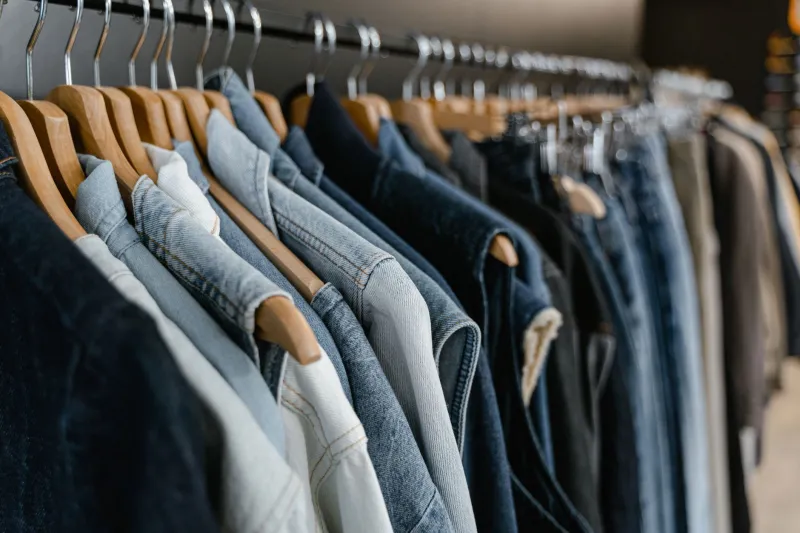
- Heavyweight cotton denim: The classic break-in story. Raw denim develops fades that map your life — the wallet, the phone, the bike frame.
- Wool (especially merino and mending-friendly knits): Resilient, odor-resistant, and one of the few fibers that can essentially renew itself with a steam and a comb.
- Cheap poly-blends: The milk cartons. Pilling, stretching, and odor-holding on a countdown clock.
The Second Skin Test: Five Questions Before You Buy
You don't need a lab to judge durability. You need a habit. Before buying anything, run it through this quick check — we call it the Second Skin Test:
1. Hold it to the light. Pull the fabric taut in front of a window. If light floods through a knit or woven that's meant to be substantial, it's thin, and thin fails fast.
2. Scrunch and release. Crush the fabric in your fist for ten seconds. Natural fibers like linen and hemp will wrinkle and recover with character. Fabrics that stay creased in weird plastic-y lines are telling you something about their blend.
3. Check the seams. Turn it inside out. Straight, tight stitching? Reinforced stress points at the shoulders, armholes, and crotch? Good. Loose threads and a single wobbly line of stitching? Hard pass.
4. Read the fiber content like a menu. Look for long-fiber naturals — hemp, flax, quality cotton, wool — near the top of the list. A garment that's 60% polyester is a polyester garment with a marketing budget.
5. Ask the repair question. Picture this item in five years. Can you imagine re-stitching a hem, darning an elbow, replacing a button? If the answer is no — if it's the kind of thing that could only ever be thrown away — it's not really clothing. It's packaging.
Aging Is the Point
Here's the reframe worth sitting with: a garment that shows its age isn't failing. It's recording. The faded knees on your raw denim, the softened drape of a hemp shirt you've had since 2019, the darned elbow on your favorite sweater — that's not damage. That's a log of where you've been.
Vintage sellers understand this better than anyone. Nobody walks into Marisol's shop asking for clothes that look like they've never been worn. They come looking for the opposite: pieces with history baked in, garments that survived because they were built to.
The fashion industry trained us to expect expiration. But durability is a choice — made by the brands that design for it, and by the shoppers who demand it. The next time you're standing in a fitting room, don't ask whether it looks good today. Ask whether it'll look better in five years.
If the answer is yes, you've found your second skin.