One Outfit, Every Day: Inside America's Quiet Uniform Revolution
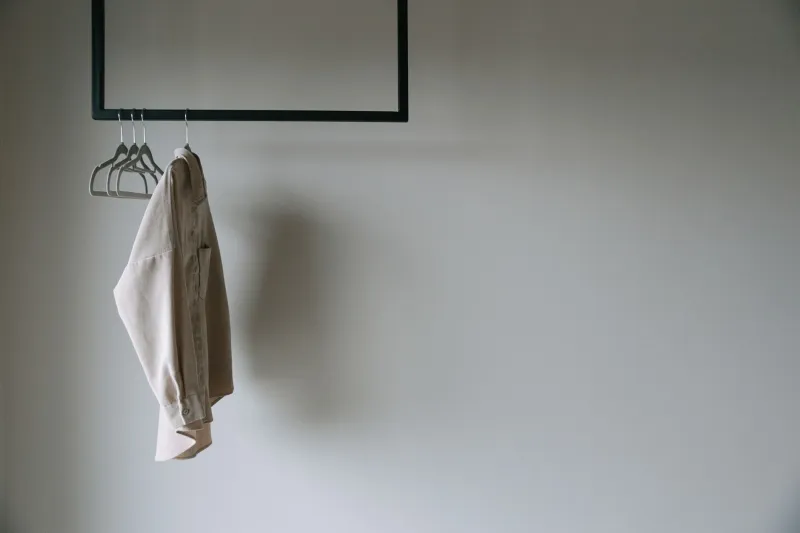
There's a moment familiar to millions of Americans: standing in front of a closet stuffed with clothes, feeling like there's nothing to wear. Now there's a counter-movement spreading from Portland to Pittsburgh — people who open a closet holding three identical outfits, and call it freedom.
The personal uniform movement isn't new. Steve Jobs famously wore the same black turtleneck for over a decade. But what started as a tech-world quirk has become something more intentional — and more sustainable. Today's uniform-wearers aren't just simplifying their mornings. They're making a quiet argument about consumption itself.
The Decision Fatigue Tax
Psychologists have long noted that every choice we make draws from a limited well of mental energy. Researchers call it decision fatigue, and the average American makes roughly 35,000 decisions a day. For uniform-wearers, clothing is one decision they've simply deleted.
Ask around and the reasons repeat like a chorus. A Denver nurse who owns five sets of the same merino-blend scrubs says she reclaimed "twenty minutes and a low-grade headache" every morning. A Chicago copywriter wears the same black hemp-linen shirt and trousers five days a week and jokes that she's "never been better dressed."
But there's a deeper logic underneath the convenience. When you commit to one outfit, every flaw in that outfit becomes impossible to ignore. Cheap seams. Sweaty synthetics. Pilling after the third wash. The uniform movement, perhaps accidentally, forces a confrontation with quality — and quality is where sustainability begins.
The Environmental Math of Fewer Clothes
The numbers are stark. The average American buys around 70 garments a year, and most of them — by some estimates, more than two-thirds — end up in landfills or incinerators within a decade. A wardrobe pared down to a handful of pieces flips that equation entirely.
The math looks something like this: if one durable outfit replaces, say, thirty impulse purchases a year, you're cutting not just your spending but the water, dye, shipping, and landfill burden of thirty production cycles. One well-made hemp-cotton shirt, worn hundreds of times, has a fraction of the per-wear footprint of a dozen disposable tees.
There's also a behavioral shift that's harder to quantify. Uniform-wearers report buying with almost painful deliberation. When a piece becomes the piece — the one you'll wear every day for the next three years — you research it. You ask where it was grown, how it was dyed, whether the seams will hold. Fast fashion doesn't survive that kind of scrutiny.
Why Stem Fibers Are the Uniform Movement's Secret Weapon
Here's where the one-outfit life gets interesting. Committing to a single look means committing to a single fabric, and not all fabrics are built for daily rotation.
Enter stem fibers — hemp, flax (linen), and their plant-based cousins — pulled from the stalks of fast-growing plants rather than water-hungry cotton fields or petroleum refineries. Hemp in particular has become a darling of the uniform crowd, and for good reason:
- It gets softer with every wash, meaning the outfit you wear daily actually improves over time instead of wearing out.
- It's naturally breathable and antimicrobial, which matters when something is on your body five days a week.
- It's remarkably durable. Hemp fibers are among the strongest natural fibers on earth — historically used for rope and sails, now holding up in a pair of everyday trousers.
- It grows fast with minimal inputs, often needing little irrigation and no synthetic pesticides, which keeps the environmental ledger clean from the first acre.
Flax earns similar points. Linen's slightly lived-in texture practically announces itself as anti-fast-fashion, and it thrives in a rumpled, unbothered way that suits people who've stopped chasing trends.
The uniform-wearers we spoke to all said the same thing: once you're wearing one outfit daily, fabric becomes everything. Synthetic blends that trap heat or hold odor simply don't survive the experiment. Plant-based stem fibers do.
Building Your Own Uniform
You don't need to go full Steve Jobs tomorrow. Most people ease in with a starter uniform — one shirt, one pant, one layer — and expand only if the experiment sticks. A few principles from the converts:
- Choose a palette, not a piece. Two or three colors in the same tones let you mix a tiny wardrobe into dozens of combinations.
- Buy for the wash cycle, not the fitting room. A uniform has to survive real life — sweat, weather, repetition.
- Prioritize repairability. Look for brands that offer repairs or use construction you can mend at home. A uniform is a long relationship, not a fling.
- Test the fabric on your skin for a week. Daily wear is the ultimate comfort audit.
Same Clothes, Different Statement
There's something almost radical about dressing the same way every day in a culture built on novelty. The uniform says: I know what I like. I've done the work once. I'm opting out of the churn.
And in an era when the fashion industry produces some 100 billion garments a year, opting out — even in the small, daily act of pulling on the same well-loved hemp shirt — is its own kind of statement. Not a loud one. Just a comfortable, breathable, quietly durable one.
Wear the change. Sometimes the change looks exactly like what you wore yesterday.